
Dumpster Weight Limits & Overage Fees in Ocala, Explained
By Keith Meredith · October 25, 2026
Short answer: our 12-yard dumpster includes 1.5 tons (3,000 lb) and the 16-yard includes 2 tons (4,000 lb). Go over and it's $70 per ton, prorated off the landfill's scale ticket — so 500 extra pounds costs you $17.50, not a penalty. The catch isn't the fee. It's that a few materials hit the limit while the can still looks half empty.
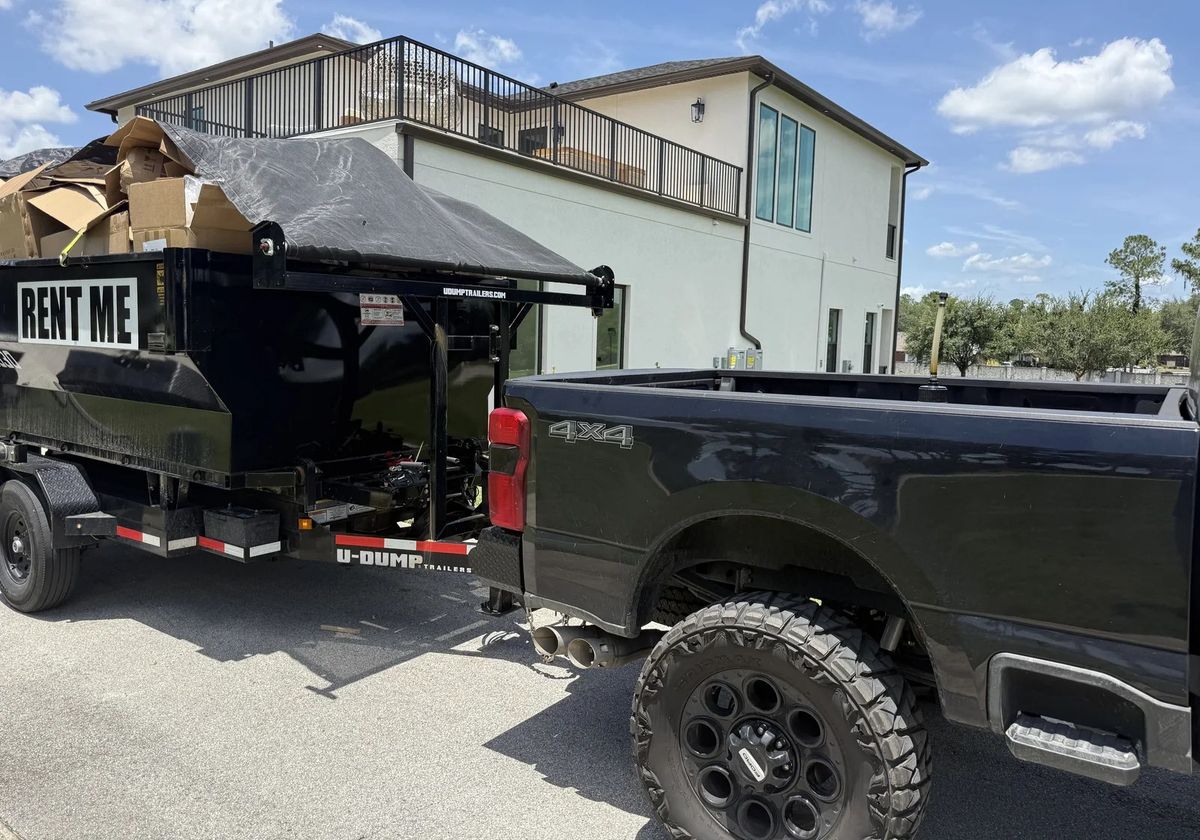
Somebody always asks it the same way: “So what happens if I go over?” Usually right after they read the fine print on another company’s quote and found a weight limit nobody mentioned on the phone. Weight is the part of dumpster rental the industry likes to keep vague, because vague is where the surprise charges live. Here’s the whole thing, with our actual numbers.
What’s included in each can
- 3,000 lb of debris included
- $390 flat · 14' × 7.5' × 3.5'
- About 4 pickup-truck loads
- Over the limit: $70/ton, prorated
- 4,000 lb of debris included
- $449 flat · 16' × 7.5' × 4.5'
- About 6 pickup-truck loads
- Over the limit: $70/ton, prorated
Both prices include delivery, pickup, disposal and a 10-day rental. The weight allowance is part of that flat rate, not an add-on — it’s the amount of landfill disposal we’ve already paid for on your behalf. The full rate card, including what’s baked into it, is in our guide to how much a dumpster rental costs in Ocala.
How much does a dumpster weigh — and do you pay for the can?
Two different questions hide inside “how much does a dumpster weigh,” so let’s take them both.
The empty container. A roll-off in the 10- to 20-yard range is heavy steel — industry-typical empty weights run roughly 2,500 to 4,500 lb depending on size and gauge. That’s a general range, not a spec sheet for our cans.
What you’re actually charged on. Not that. At the disposal facility the truck is weighed loaded coming in and empty going out. The difference is your debris, and that’s the only number on the ticket that matters. The can’s own weight never counts against your 1.5 or 2 tons.
What common debris weighs
This is the table that explains every overage bill we’ve ever seen. The numbers are rough industry rules of thumb for loose debris, not scale tickets — moisture, how tightly it’s packed and what’s mixed in all move them. Use them to see which way your job leans, not to the pound.
| Material | Rough weight | What that means for your can |
|---|---|---|
| Household junk, furniture, boxes | ~150–250 lb per cubic yard | A full 12-yard lands around 1,800–3,000 lb — at or under the 1.5 tons. Space runs out first. |
| Drywall (1/2") | ~50–55 lb per 4×8 sheet | Bulky and moderate. A room or two is fine; a whole-house gut adds up. |
| Asphalt shingles | ~200–350 lb per square (100 sq ft) | A typical 20–25 square roof is 2–4+ tons. Always quoted upfront. |
| Tile with its mortar | ~5–10 lb per square foot, estimate | A bathroom floor and shower can put a remodel over by itself. |
| Dirt and sand | ~2,000–2,700 lb per cubic yard | About one cubic yard eats the entire 12-yard allowance. Wet is heavier. |
| Concrete (poured, solid) | ~4,000 lb per cubic yard | Under a cubic yard of slab fills the 12-yard's 1.5 tons. Always quoted upfront. |
| Brush and yard waste | Light dry, much heavier wet | Storm limbs after a week of Florida rain weigh far more than they look. |
Look at the first row and the last two. A 12-yard of garage junk and a wheelbarrow-sized pile of broken concrete can weigh the same. That’s the whole story of dumpster weight limits: people judge a load by how full the can looks, and the scale judges it by what’s in the bottom.
How overage fees work here (and what to watch for elsewhere)
Our Terms say it plainly: weight above the allowance is billed at $70 per ton, prorated, based on the disposal facility’s scale ticket. Here’s what that looks like against the way a lot of the industry does it:
| Question to ask | Common in the industry | Waste Maniacs |
|---|---|---|
| Is the weight limit on the quote? | Often only in the contract | Printed on the site: 1.5t / 2t |
| Overage rate | Varies, sometimes not stated until billing | $70 per ton, published |
| Rounded up to the next full ton? | Sometimes | No — prorated to the pound |
| Do you see the scale ticket? | You may have to ask | Yes, we show you |
| Heavy debris | Sometimes discovered at the scale | Disclosed at booking, quoted upfront |
Heavy debris: tell us at booking
Concrete, dirt, sod, brick, tile and roofing shingles don’t go on the standard flat rate. They’re heavy enough that a single load can be several times the allowance, so we quote them as their own job — before the can ever lands in your driveway.
Roofing is the most common heavy job we run, and it has its own math — squares, layers, shingle type. Our guide to dumpster rental for a roof tear-off walks it square by square. And if the heavy part is stumps and dirt from clearing a lot, that’s usually not a dumpster job at all — it’s what our land clearing crew in Marion County is for.
The weight limit you can’t pay your way past
There’s one limit that isn’t about money. A can loaded over the top rail can’t legally go down the road, and a can packed solid with dense material can be more than a truck should be lifting. Neither one is a fee — it’s a return trip, and nobody wants that.
How to stay under the limit
- Pick the size by weight when the job is heavy. For a cleanout, pick by volume — our guide to what size dumpster you need does that. For a remodel with tile or plaster, the 16-yard’s extra half-ton is worth as much as its extra space, and it’s only $59 more.
- Keep the heavy stuff out of a light load. A garage cleanout doesn’t need the old patio pavers thrown on top. Separate heavy debris gets priced as heavy debris.
- Don’t let rain into the can. Wet drywall, wet cardboard and wet brush all gain weight. A tarp over an open can during an Ocala afternoon storm is cheap insurance.
- Keep banned items out entirely. Tires, batteries, liquids and freon appliances aren’t a weight problem — they’re a rejection problem. The full list is in what can and can’t go in a roll-off dumpster.
- Ask before you load. Text us a photo of the pile. We’d much rather tell you “that’s a heavy-debris quote” on Tuesday than show you a scale ticket on Friday.
When you’re not going to get close
Worth saying, since most people reading this are worried about nothing. Garage cleanouts, move-outs, estate cleanouts, furniture, boxes, carpet, general clutter — this is bulky, light material, and it fills the can long before it fills the allowance. If that’s your job, don’t overthink the weight. Pick the size by volume, load it flat, and forget the scale exists. If you’d rather not load anything at all, our junk removal crew in Ocala prices by the space in the truck, so weight never comes up. Our side-by-side of junk removal vs dumpster rental in Ocala shows which one is cheaper for your job.
The bottom line
Our 12-yard includes 1.5 tons, the 16-yard includes 2 tons, and extra weight is $70 a ton, prorated, off a scale ticket you get to see. Light jobs never get near it. Heavy jobs get quoted upfront instead of billed after. If that’s the kind of deal you want, book a roll-off dumpster in Ocala — and tell us what’s going in it.
Frequently asked questions
How much weight can a dumpster hold? It depends on the company and the size. Our 12-yard roll-off includes 1.5 tons (3,000 lb) and our 16-yard includes 2 tons (4,000 lb) in the flat rate. You can go over, and extra weight is billed at $70 per ton, prorated — but concrete, dirt and other heavy debris should be disclosed at booking so the job is quoted correctly.
How much does an empty dumpster weigh? Industry-typical empty roll-offs in the 10- to 20-yard range weigh roughly 2,500 to 4,500 lb, depending on size and steel gauge. You’re never charged for that: the disposal facility weighs the truck loaded and empty, and only the difference — your debris — counts against the allowance.
What happens if my dumpster is over the weight limit? Weight above the included allowance is billed at $70 per ton, prorated to the pound, based on the disposal facility’s scale ticket — which we show you. Half a ton over is $35. Heavy materials that weren’t disclosed at booking are billed at the same overage rate.
How much concrete can I put in a 12-yard dumpster? Not much before you hit the allowance — solid concrete weighs roughly 4,000 lb per cubic yard, so less than a cubic yard fills the 12-yard’s 1.5 tons. That’s why concrete, dirt, brick, tile, sod and shingles are quoted separately. Tell us the material and roughly how much when you book.
Is the dumpster weight limit the same as the fill line? No. The weight allowance is what’s included in the price. The fill line is the top rail of the can — nothing can be loaded above it, because an overfilled container can’t legally be hauled. You can be under the weight and still overfilled, or at the rail line and well over the weight.
Do household cleanouts usually go over the weight limit? Rarely. Furniture, boxes and general junk run roughly 150 to 250 lb per cubic yard, so a full 12-yard of household junk typically lands at or under 1.5 tons. You’ll run out of space long before you run out of weight.
See sizes and get your flat rate — or call (352) 352-DUMP, tell us what’s going in the can, and we’ll tell you in about a minute whether weight is even a question.

Owner/operator of Waste Maniacs and a lifelong Ocala small-business builder — he also runs Benchmark Web Development and Black Rock Mortgage, and writes about getting local jobs done right. About Keith → · full bio →
Ready when you are.
Flat-rate pricing, same-day service across Ocala & Central Florida.
See sizes & get your flat rate →Trash talk encouraged.
Got a project? Tell us what you've got — we'll get you a flat price fast.